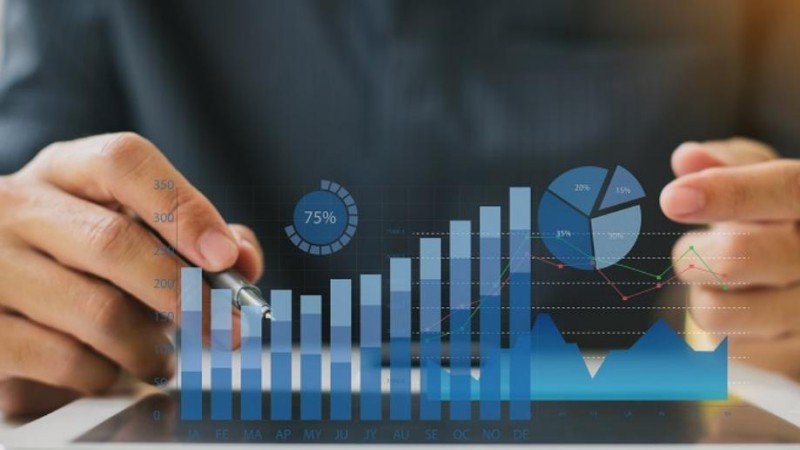
Challenges and Risks of Interpreting Real-Time Financial Data
In the ever-evolving landscape of global finance, real-time financial data has emerged as a cornerstone for investors, analysts, and financial institutions seeking to make informed decisions. However, the interpretation of this data is fraught with challenges and risks that demand careful consideration.
This article delves into the complexities of interpreting real-time financial data, exploring the key challenges and risks involved, and offering insights into how stakeholders can mitigate these issues.
Key Challenges in Interpreting Real-Time Financial Data
1. Data Quality and Accuracy
One of the primary challenges in interpreting real-time financial data is ensuring its quality and accuracy. Financial data is sourced from a multitude of channels, including exchanges, financial institutions, regulatory bodies, and third-party data providers.
The vastness and diversity of these sources make it difficult to guarantee the consistency and reliability of the data. Inaccuracies, errors, or omissions in the data can lead to misguided investment decisions, resulting in significant financial losses.
For instance, if a real-time data feed for stock prices is delayed or contains incorrect values, investors may trade based on outdated or erroneous information, leading to suboptimal outcomes. Moreover, the complexity of financial instruments and the rapid pace of market changes further exacerbate the data quality challenge.
2. Data Overload and Information Overload
The abundance of real-time financial data available today can lead to data overload and information overload. With an overwhelming amount of data points, charts, indicators, and news feeds, investors and analysts may struggle to filter out the noise and focus on the most relevant information.
This can result in analysis paralysis, where decision-making is delayed or hindered due to the sheer volume of data.
Furthermore, the constant stream of real-time updates can create a sense of urgency, prompting investors to make hasty decisions without fully considering the long-term implications. The pressure to act quickly in response to real-time data can lead to impulsive trading and increased risk-taking.
3. Data Interpretation and Bias
Interpreting real-time financial data requires a high level of expertise and analytical skills. Different analysts may interpret the same data set in varying ways, leading to divergent investment recommendations. Moreover, human bias can creep into the data interpretation process, influencing decisions based on preconceived notions, emotions, or past experiences.
For example, an analyst with a bearish outlook on the market may interpret positive economic data as a temporary blip, while a bullish analyst may view it as a sign of sustained growth. These biases can distort the interpretation of real-time financial data, leading to suboptimal investment strategies.
4. Technological and Infrastructure Limitations
The effective interpretation of real-time financial data relies heavily on advanced technological infrastructure and data analytics tools. However, not all investors and financial institutions have access to the latest technology or the resources to develop and maintain sophisticated data analysis systems.
This can create a disparity in the ability to interpret and act on real-time data, favoring larger institutions with greater technological capabilities.
Moreover, technological glitches, system failures, or cyberattacks can disrupt the flow of real-time data, compromising the integrity and reliability of the information. These limitations can hinder investors' ability to make timely and accurate decisions, exposing them to increased risks.
Risks Associated with Real-Time Financial Data Interpretation
1. Market Volatility and Sudden Price Swings
Real-time financial data can reflect sudden market movements and price swings, which can be difficult to anticipate or react to in a timely manner. The rapid dissemination of news, economic indicators, or geopolitical events can trigger significant market reactions, leading to sharp price fluctuations.
Investors who rely solely on real-time data without considering the broader market context or long-term trends may be caught off guard by these sudden price swings, resulting in substantial losses.
Moreover, the high-frequency trading (HFT) strategies employed by some institutional investors can exacerbate market volatility, making it even more challenging for retail investors to interpret and react to real-time data.
2. Liquidity Risks
Real-time financial data can provide insights into the liquidity of financial instruments. However, interpreting this data requires an understanding of the underlying liquidity dynamics, which can be complex and subject to rapid changes.
In times of market stress or uncertainty, liquidity can dry up suddenly, making it difficult for investors to execute trades at desired prices. Relying on real-time data without considering liquidity risks can lead to situations where investors are unable to exit positions or face significant slippage costs, resulting in losses.
3. Compliance and Regulatory Risks
The interpretation and use of real-time financial data are subject to a myriad of compliance and regulatory requirements. Financial institutions and investors must adhere to strict rules governing data privacy, market manipulation, insider trading, and other regulatory concerns.
Misinterpreting or misusing real-time data can lead to non-compliance with these regulations, exposing institutions and individuals to significant legal and financial risks. Moreover, the rapidly evolving regulatory landscape can make it challenging to keep up with the latest compliance requirements, increasing the risk of unintentional violations.
4. Cybersecurity and Data Breach Risks
The increasing reliance on real-time financial data has also heightened the risks associated with cybersecurity and data breaches. Financial institutions and data providers are prime targets for cyberattacks, as a breach can compromise sensitive client information, disrupt trading operations, and lead to significant financial losses.
Investors who use real-time data platforms must be vigilant about the security measures implemented by these providers. A data breach can result in the theft of personal or financial information, leading to identity theft, fraud, or other malicious activities.
Moreover, the reputational damage caused by a data breach can have long-lasting consequences for both financial institutions and investors.

Mitigating the Challenges and Risks
1. Enhancing Data Quality and Accuracy
To mitigate the challenges associated with data quality and accuracy, investors and financial institutions should source real-time financial data from reputable and regulated providers. Implementing robust data validation and verification processes can help identify and correct errors or inconsistencies in the data.
Moreover, leveraging advanced data analytics tools and machine learning algorithms can improve the accuracy and reliability of real-time data interpretation. These technologies can help filter out noise, identify patterns, and provide more accurate insights into market trends.
2. Streamlining Data Interpretation and Analysis
To combat data overload and information overload, investors should develop a structured approach to data interpretation and analysis. This can involve setting clear investment objectives, defining relevant data points, and using visualization tools to present data in a more intuitive and actionable format.
Moreover, investors can benefit from seeking the expertise of financial analysts or utilizing automated trading systems that incorporate sophisticated algorithms to interpret real-time data. These systems can help filter out irrelevant information and provide more focused investment recommendations.
3. Addressing Bias and Emotional Decision-Making
To mitigate the risks associated with bias and emotional decision-making, investors should adopt a disciplined and systematic approach to data interpretation. This can involve setting predefined rules for entering and exiting positions, using stop-loss orders to limit potential losses, and avoiding impulsive trading based on short-term market fluctuations.
Moreover, investors can benefit from seeking diverse perspectives and engaging in regular discussions with financial advisors or peers to challenge their own biases and assumptions.
4. Strengthening Technological and Infrastructure Capabilities
To address the technological and infrastructure limitations associated with real-time financial data interpretation, investors and financial institutions should invest in advanced data analytics tools, high-speed trading systems, and robust cybersecurity measures.
Moreover, collaborating with technology partners or utilizing cloud-based solutions can help reduce the costs and complexities associated with developing and maintaining in-house data analysis systems.
Interpreting real-time financial data is a complex and challenging task that demands a high level of expertise, analytical skills, and technological capabilities. While real-time data provides valuable insights into market trends and investment opportunities, it also poses significant challenges and risks that must be carefully managed.
By enhancing data quality and accuracy, streamlining data interpretation and analysis, addressing bias and emotional decision-making, and strengthening technological and infrastructure capabilities, investors and financial institutions can mitigate the challenges and risks associated with real-time financial data interpretation.
In doing so, they can make more informed and timely investment decisions, ultimately achieving their financial goals in an increasingly dynamic and complex global financial landscape.
 1
1 1
1OTHER NEWS
-
- Is German manufacturing losing its edge? The latest casualty of the US-China strategic rivalry
- By ZXY 29 Jul,2025

-
- Watch out for the Following Credit Card Scams!
- By Wendy 24 Apr,2023
-
- The widening U.S. fiscal deficit is fueling debt concerns
- By ZXY 30 Jul,2025

-
- What does the upgraded regulation of digital currencies mean to investors?
- By ZH 25 Jul,2025

-
- What do you Mean by Mortgage? What Does it Mean to Have a Mortgage?
- By Little Grapes 24 Apr,2023

-
- "Buy Now, Pay Later" is changing the consumer finance landscape: a payment revolution spreading around the world
- By ZH 25 Jul,2025

-
- How much longer can the eurozone hold out? The ECB has reached the end of its rate hike cycle
- By ZXY 01 Aug,2025
-
- Credit card points and rewards seem cost-effective, but they actually hide these traps
- By ZXY 01 Sep,2025

-
- Gold surges to a new all-time high—what are investors afraid of?
- By ZXY 29 Jul,2025
-
- How to Avoid Being Scammed by Credit Card Fraud!
- By Wendy 24 Apr,2023
-
- Do small businesses really need tax services? When can they file their own taxes?
- By YCY 27 Jan,2026

-
- Why Do Most People Overlook “Cash Flow Risk”?
- By ZXY 11 Oct,2025