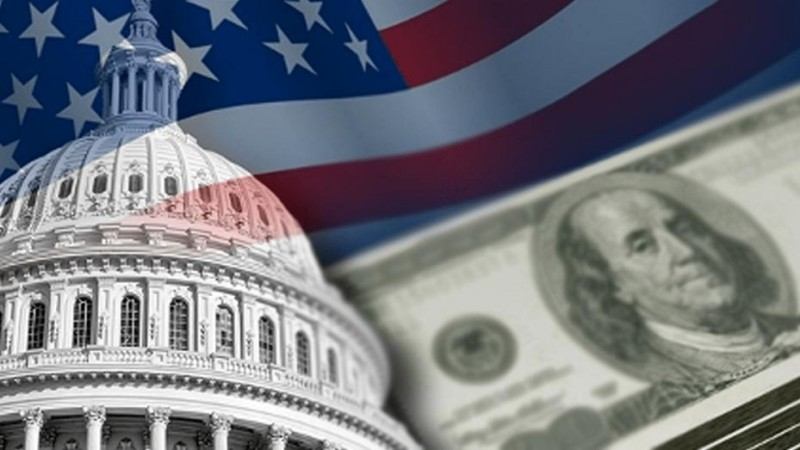
Behind the strengthening of the US dollar index: Is global capital flowing back to the United States?
In mid-2025, the US dollar index (DXY) rebounded strongly and approached the 110 mark again, setting a new high since 2023. Against the backdrop of divergent global economic growth and different policy directions of major central banks, the US dollar has once again become a safe haven for global funds.
For investors, a key question is emerging: Does the strengthening of the US dollar mean that global funds are accelerating their return to the United States? What economic signals are hidden behind this, and what risks and opportunities may it bring?
1. The strong return of the US dollar: the three driving factors behind it
The Federal Reserve maintains a hawkish tone
US inflation is gradually cooling down, but the Federal Reserve has not yet clearly started a rate cut cycle. The latest dot plot shows that most officials expect only one rate cut this year, lower than the market's previous expectation of two or more. Higher policy interest rates attract global capital to flow into US dollar assets, especially the US bond market.
Global economic growth divergence
Major economies such as the eurozone, Japan, and the United Kingdom are facing pressure from slowing growth or technical recession.
The political instability in Europe, the vague monetary policy shift in Japan, and the weak decline in inflation in the UK have weakened the attractiveness of assets in these countries, and the resilience of the US economy has attracted the return of international capital.
Risk aversion is on the rise
Geopolitical tensions continue (Russia-Ukraine conflict, the situation in the Middle East, and the US election) to increase global policy uncertainty, and investors tend to allocate US dollar assets as a "risk hedge".
2. The double-edged sword effect of the stronger US dollar on the US economy
Positive impact: capital inflows and lower financing costs
The stronger US dollar enhances the attractiveness of the US financial market, promotes the inflow of foreign investment (US bonds, corporate mergers and acquisitions, real estate, etc.), injects vitality into the capital market, and depresses the long end of government bond yields.
Negative impact: Export pressure and shrinking corporate overseas profits
The strong US dollar hits export-oriented companies (industry, manufacturing, and technology companies), and overseas sales are denominated in local currency, resulting in profit dilution. In addition, the rising cost of US dollar debt in emerging markets may trigger regional financial pressures and indirectly affect the US export market.
3. Is global capital flowing back to the United States?
Data shows trend
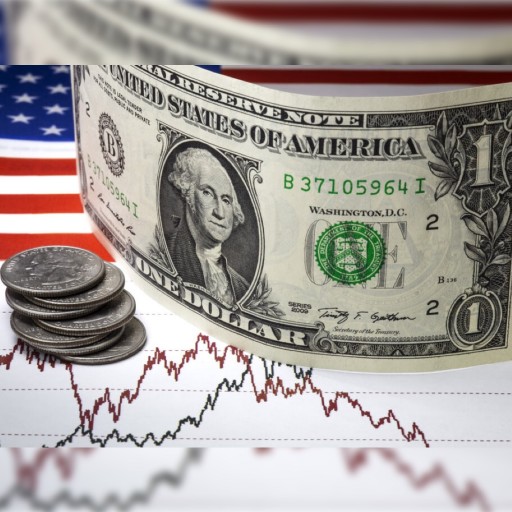
According to data from the Bank for International Settlements (BIS) and the U.S. Treasury Department, since the end of 2024, overseas investors' net purchases of U.S. short-term Treasury bonds and money market instruments have increased significantly, mainly from sovereign wealth funds in Europe, Japan and the Middle East.
The rise of the U.S. stock market (especially the technology sector) has also attracted international funds to increase their investment in S&P 500 and Nasdaq products.
The relative attractiveness of U.S. dollar assets has increased
Compared with the interest rate environment corresponding to currencies such as the euro and the yen, U.S. dollar assets offer higher returns. Coupled with the advantages of global settlement, U.S. bonds are more likely to attract safe-haven buying during turbulent times due to their status as "global risk-free assets."
4. Emerging markets bear the brunt: foreign capital outflows and currency depreciation risks
The strong U.S. dollar has caused emerging market currencies such as the Brazilian real, Indian rupee, and Indonesian rupiah to decline against the U.S. dollar, and the central bank has frequently intervened.
The withdrawal of foreign capital has impacted local bond and stock markets, and the risks of economies with high foreign debt dependence have been amplified. Some countries have raised interest rates to stabilize their currencies, but this may suppress domestic growth, forming a vicious cycle.
For U.S. investors, the risk-return ratio of emerging market assets has increased, and exchange rate and policy risks need to be carefully assessed.
5. Impact and strategic recommendations for European and American investors
US dollar assets still have advantages, but they should be diversified
In the short term, short-term US bonds, investment-grade corporate bonds, money market funds or high-yield savings accounts can be allocated; in the long term, global diversification should be maintained to avoid the risk of exchange rate reversal caused by the US election and policy shifts.
Foreign currency investment needs to manage exchange rate risk
Investors holding non-US dollar assets can use currency hedging products, exchange currencies in batches or choose US dollar-denominated funds to reduce the impact of exchange rate fluctuations.
Pay attention to the time difference between interest rate and policy changes
The time difference between the policies of the European and American central banks affects the flow of funds: if the ECB/Bank of England cut interest rates in advance and the Fed delays, the US dollar advantage may continue; if the Fed releases a loose signal, the US dollar may weaken, leading to a rebound in risky assets.
6. Is the strengthening of the US dollar a warning or an opportunity?
The continued strength of the US dollar is both an affirmation of the resilience of the US economy and a reflection of the global reassessment of risks. Driven by policy spreads, economic growth and risk aversion demand, the return of funds to the United States is the current main trend.
For investors, understanding the structural logic behind the strength of the US dollar is more important than predicting short-term exchange rates. Maintaining flexible allocation and risk control is the key to coping with global capital migration.
 1
1 1
1OTHER NEWS
-
- How to Avoid Being Scammed by Credit Card Fraud!
- By Wendy 24 Apr,2023

-
- How much longer can the seven tech giants of the US stock market withstand high interest rates?
- By ZXY 28 Jul,2025

-
- Is German manufacturing losing its edge? The latest casualty of the US-China strategic rivalry
- By ZXY 29 Jul,2025

-
- With China's exports declining, is the global consumption chain beginning to break?
- By ZXY 31 Jul,2025
-
- "Buy Now, Pay Later" is changing the consumer finance landscape: a payment revolution spreading around the world
- By ZH 25 Jul,2025

-
- Real Estate Investment Needs to be Careful!
- By Little Grapes 24 Apr,2023

-
- Trump reignites tariff war, global supply chains face another shakeup
- By ZXY 28 Jul,2025
-
- Some Tips on Buying a Condo!
- By Wendy 24 Apr,2023

-
- How much longer can the eurozone hold out? The ECB has reached the end of its rate hike cycle
- By ZXY 01 Aug,2025

-
- Yield Curve Inversion Resurfaces: Is There Still Hope for a Soft Landing in the U.S. Economy?
- By ZXY 31 Jul,2025
-
- High-yield stocks vs. growth stocks: Which type of investment is more resistant to risks? A game of wealth defense and offense
- By ZH 23 Jul,2025

-
- The widening U.S. fiscal deficit is fueling debt concerns
- By ZXY 30 Jul,2025